Leading the Way: How Main Roads WA Transformed End of Life Tyres into Sustainable Road Infrastructure
Category
Roads
Industries
Roads Infrastructure
/Civil Infrastructure
States
WA
Executive Summary
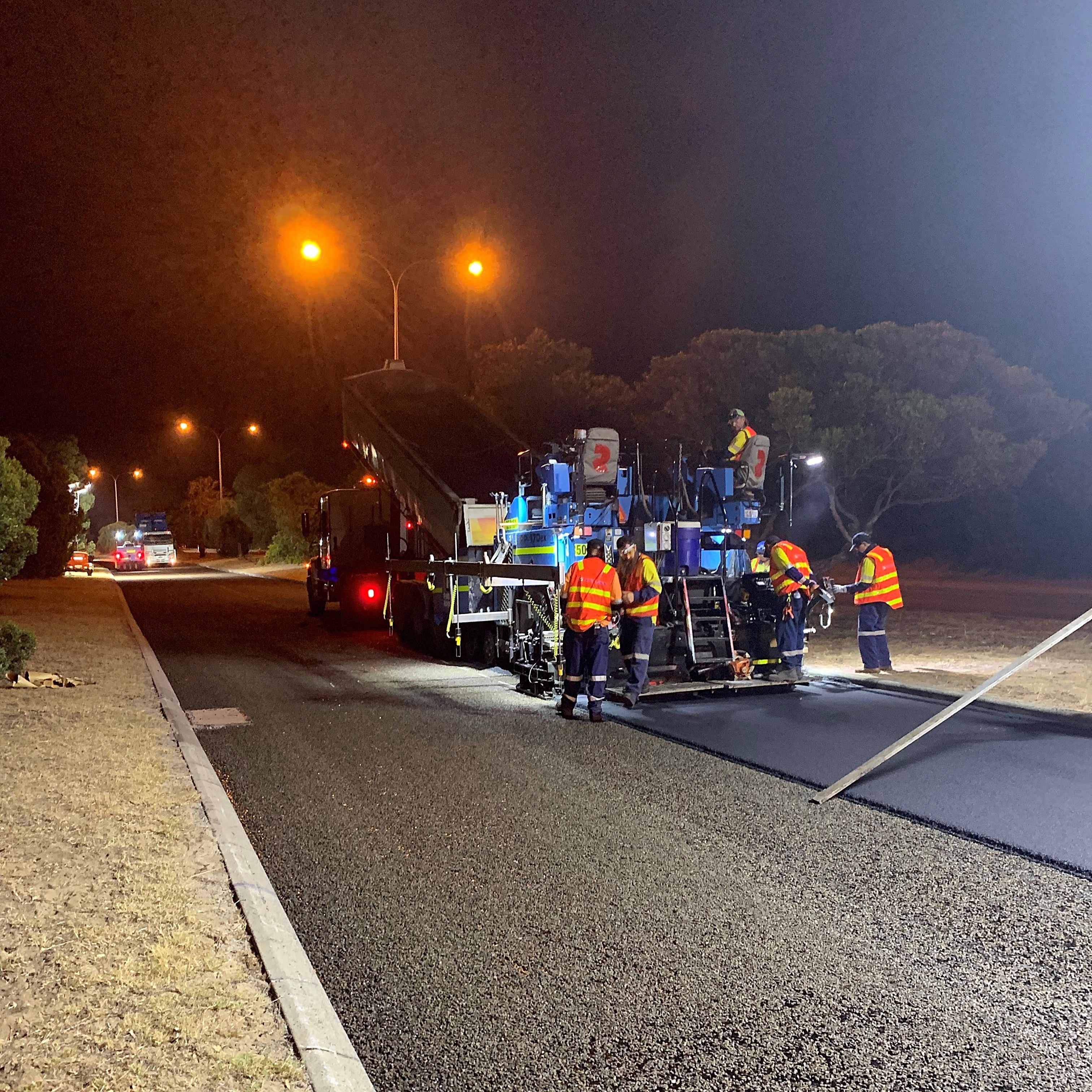
Main Roads Western Australia has emerged as Australia's pioneer in successfully implementing crumb rubber technology from end-of-life tyres into road construction by developing engineered performance materials. Through strategic vision, industry partnerships, and rigorous quality standards, they've created a sustainable model that delivers better roads, reduces environmental impact, and builds local industry capacity.
This case study examines their journey from initial research to widespread implementation for asphalt mixtures, offering valuable lessons for other road authorities across Australia.
Whilst this case study focusses on asphalt mixtures, it is noted Main Roads utilises crumb rubber sealing as business as usual across the state for many years, with S15R being the binder used for SAMI sealing and resealing across the state.
The Challenge
Western Australia faces unique infrastructure challenges: vast distances, extreme temperatures, limited building materials, heavy axle loads and the constant need to maintain thousands of kilometres of roads in harsh climate and stressed conditions.
Millions of used tyres were accumulating across the state, creating environmental concerns and missed opportunities for resource recovery. Main Roads envisaged the use of crumb rubber would add benefits to whole of life of assets by adopting technologies which would improve standard materials.
The challenge was clear: find a way to transform this waste stream into a valuable road construction material while maintaining or improving performance standards.
The Solution: Strategic Implementation of Crumb Rubber Technology
Building the Foundation
The initial indication to utilise crumb rubber into asphaltic mixtures was through technology brought to Australia from the AfPA Study Tour of South Africa 2018, sponsored by TSA.
Main Roads WA, through its Western Australian Road Research and Innovation Program (WARRIP), investigated the use of crumb rubber in road surfacing applications. They approached crumb rubber implementation methodically, starting with comprehensive research and industry partnerships. They prioritised understanding the science behind improving road performance with recycled materials rather than hurrying to market to implement change which could lead to ruining the technology.
Their success hinged on setting rigorous quality standards through a thorough testing program. They created specifications to ensure consistent performance and collaborated with suppliers to meet these standards, including auditing for crumb rubber quality and working with accredited testers. WA was at an advantage, with our industry business partner Fulton Hogan, having designed and implemented crumb rubber asphalt technologies in South Africa.
Product Development and Specification
The team developed several crumb rubber asphalt binder products tailored to different road applications:
- A18R: The initial research -
- Open graded asphalt (OGA) utilising partially digested crumb rubber to use the performance elastic behaviour of crumb rubber particles to resist fatigue failure and ravelling, with added benefits of higher voids to improve surface drainage and reduced spray in wet conditions.
- Gap graded asphalt (GGA) enhanced resistance to deformation and cracking and fatigue cracking as the partially digested crumb enhanced the flexibility of the asphalt.
- A10R: Industry Focus –
- Utilising substantially digested crumb rubber with traditional polymers for a longer storage stable binder. Developed with sustainability in mind for local government and Main Roads projects and user-friendly advantages for industry, this binder is a direct substitution into dense graded asphalts designed as an alternative to A15E, offering comparable performance characteristics.
- BR22 and BR25: the Future –
- Future development of advanced bitumen rubber blends using increased content of crumb rubber is being undertaken. The naming convention represents what this is, a bitumen rubber which is the next generation of A18R, utilising more crumb rubber for more engineering performance.
Overcoming Barriers
Main Roads WA recognised that technical solutions alone weren't sufficient. They needed to address internal and industry concerns about infrastructure, risk, handling, and performance for implementation. Their approach included:
- Education and Training: Comprehensive programs to educate on proper handling, storage, and application techniques for crumb rubber binders.
- Risk Management: Taking demonstration trials in the short term to build market confidence and demonstrate long-term benefits.
- Quality Assurance: Implementing robust testing protocols to ensure product consistency and performance.
Implementation Process
Implementation of new technology has its own barriers, mainly focussing on risk and ownership of failure for rectification. Main Roads worked closely with internal parties to establish an implementation plan. The plan of open graded crumb rubber with A18R consisted of:
- Yard trials as part of the WARRIP work
- Year 1 - Multi-shift resurfacing works
- Year 2 - 30% target resurfacing works
- Year 3 – 50% target resurfacing works
- Year 4 - 100% target resurfacing works
- Year 5 – full implementation as BAU for all Main Roads work and removal of previous Specification.
Results and Benefits
Environmental Impact
The program delivers significant environmental benefits through:
- Productive use of end-of-life tyres reducing landfill and illegal stockpiling
- Reduced carbon emissions compared to traditional road construction through requirement of fewer interventions, reducing energy use over the asset lifecycle.
- Creation of circular economy opportunities within the transport sector
Performance Improvements
Roads constructed with crumb rubber technology demonstrate:
- Enhanced resistance to cracking due to utilising the engineering properties of rubber granules
- Enhanced reduction in ravelling due to utilising the engineering properties of rubber granules
- Enhances fatigue resistance due to utilising the engineering properties of rubber granules
- These properties all leading to longer lasting roads
Economic Benefits
The initiative generates economic value through:
- Reduced short- and long-term maintenance resulting in an improved whole-of-life cost
- Development of local recycling industry capacity
- Competitive procurement advantages for recycled content
Industry Development
Main Roads WA's leadership has fostered:
- Strong supplier relationships and quality improvements
- Streamlined specifications that reduce manufacturing complexity
- Knowledge sharing across the road construction sector
Key Success Factors
- Leadership and Vision
Success began with clear leadership commitment from the State Minister and Managing Director level, setting sustainability goals and empowering engineers to determine the best implementation methods. This top-down support was crucial for overcoming traditional resistance to new technologies.
- Long-term Perspective
Main Roads WA adopted a 10-year outlook, recognising that short-term investment and support would be necessary to build market capacity for long-term benefits. This patient approach allowed them to develop robust supply chains and contractor expertise.
- Strategic Partnerships
The program's success relied heavily on partnerships with:
- Industry suppliers willing to invest in quality improvements
- Contractors committed to proper implementation
- Research organisations providing technical validation
- Quality Focus
Main Roads WA maintained rigorous quality standards while working collaboratively with suppliers to achieve compliance. This approach built confidence in the technology while ensuring performance.
Lessons for Other Jurisdictions
- Start with Clear Goals
Define sustainability and performance objectives clearly, then allow technical teams to determine the best implementation methods. Avoid prescriptive mandates that may have a negative impact of the assets.
- Invest in Education
Comprehensive education programs for contractors, suppliers, and procurement teams are essential for successful adoption. Poor implementation by uninformed contractors can damage the reputation of the entire technology. Identifying how the technology works and the risk or issues which could occur upfront aid to smoother adoption.
- Build Gradually
Take a phased approach that allows market development and learning. Short-term higher costs may be necessary to achieve long-term benefits and market maturity.
- Standardise Where Possible
Avoid creating multiple conflicting specifications that complicate manufacturing and implementation. Work toward standardised approaches that benefit the entire industry. Ensure key elements of the technology is captured and enforced.
- Measure and Communicate
Develop robust measurement systems for both performance and sustainability outcomes. Clear communication of results builds confidence and supports expansion.
Current Status and Future Opportunities
Main Roads WA continues to expand their crumb rubber program, with the A10R product representing the next addition of binder. This novel initiative offers direct replacement capabilities for standard binders while delivering equal or superior performance without having to redesign asphalt mixtures.
The focus is now shifting toward:
- Scaling up implementation across other asphalt types
- Supporting local government adoption through education and technical support
- Developing advanced blend technologies for specialised applications
Click to enlarge
Specification 516
Click to enlarge
Specification 517

Click to enlarge
Kwinana Freeway - GGAR

Click to enlarge
Marmion Avenue - GGAR
Conclusion
Main Roads WA's success with crumb rubber technology demonstrates that ambitious sustainability goals can be achieved without compromising performance or economic viability. Where difficult challenges are present, adoption must be carefully managed to embed the technology and avoid undermining its credibility.
Their systematic approach – combining open technical rigour, defining key requirements, industry partnership, and strategic patience - offers a proven model for other road authorities.
Long-lasting transformation requires more than technical solutions; it demands leadership, education, quality focus, and a willingness to invest in long-term outcomes. By taking this comprehensive approach, Main Roads WA is not only working to solve its own infrastructure challenges but created a template for sustainable road construction that benefits the entire Australian transport sector.
As other states grapple with similar challenges around waste management, sustainability targets, and infrastructure performance, the Western Australian experience provides valuable evidence that innovative solutions can deliver multiple benefits simultaneously. The question is not whether crumb rubber technology works, but how quickly other jurisdictions can adapt and implement these proven approaches.
This case study is based on insights from Main Roads WA's sustainability team and industry partners, demonstrating the practical application of circular economy principles in major infrastructure projects.
Acknowledgements to Main Roads WA, Fulton Hogan (Through WARRIP), NTRO (Through WARRIP), SAMI Bitumen and PUMA Bitumen.

Stay up to date on the latest news and insights from TSA
Get in touch
Phone
Office
Office West, Suite 101, 271 Bridge Road,
Richmond VIC 3121
PO BOX 250 Richmond 3121