Indigenous Peoples & Local Communities

Who we work with
Indigenous Peoples & Local Communities
In Australia, Aboriginal and Torres Strait Islander peoples (referred to as Indigenous Peoples and Local Communities globally), live and work adjacent to or near key catchment areas for high-value Off-The-Road (OTR) rubber product consumption, such as mining and agriculture tyres and conveyor belts. These areas include:
- Bowen Basin (QLD): Barada Barna and Gaangulu (also known as Kangulu, Kaangooloo or Ghungalu) people
- Darling Downs & Surat Basin (QLD): Jagera, Giabal, and Jarowair peoples
- Gippsland (VIC): Gunaikurnai people
- Goldfields-Esperance (WA): Ngadju and Yilka peoples
- Hunter & Northern (NSW): Wonnarua people (Hunter Valley)
- Midwest & Upper Wheatbelt (WA): Yamatji people
- North & Yorke Peninsula (SA): Narungga (also known as Adjahdura) people
- Peel, Southwest & Lower Wheatbelt (WA): Noongar Nation, including Bindjareb people in the Peel region
- Pilbara (WA): Multiple Traditional Owner groups, including the Kariyarra, Palyku, Nyiyaparli, and Nyamal peoples
- Riverina, Murray & Central West (NSW): Wiradjuri, Mutthi Mutthi, Wamba Wamba/Wemba Wemba, Bangerang/Pangerang, and Barapa Barapa/Perrepa Perrepa peoples
- Western Victoria (VIC): Various Traditional Owner groups, including the Gunditjmara people
As traditional owners and land custodians, they have a deep intergenerational connection to these places and the natural environment, and have the potential to take up representation at consumption, collection and resource recovery stages of the product supply chain to:
- diminish the negative environmental and social impacts of OTR rubber products buried, stockpiled or dumped on Country
- take advantage of commercial opportunities offered in the removal of used OTR rubber products and recycling ventures
Research from around the world and in Australia shows that practices for effective and fair collaboration between mining and agriculture, in particular, and traditional landowners are known and effective.
In fact, the rich cultures, histories, and social and economic assets that Aboriginal and Torres Strait Islander peoples can bring to the equation will help shape and improve any OTR tyre and conveyor recovery and recycling efforts by reducing risks, such as the:
- impact created by the enduring (and sometimes unanticipated) reality of tyre waste that can affect health, livelihoods, and social/cultural wellbeing
- erosion of social license, creating real costs for operators and the prospect of trailing liabilities that may be born disproportionately by local communities.
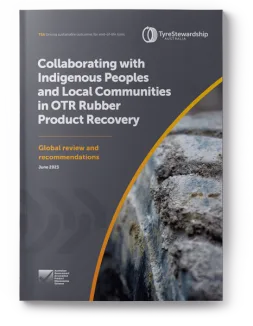
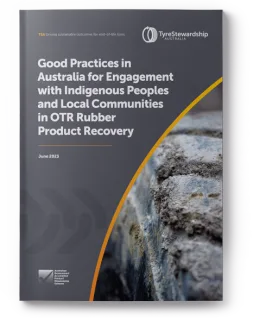
The resulting IPLC reports, released in 2023, are a practical starting point and pathway forward. The reports lay out best practice collaboration, with case studies from around the world.
In the recovery of valuable materials in the used tyres and conveyor belts when they reach end of life, the reports also identify the benefits of understanding the unique attributes of the local community, especially in regional and remote Australia, through collaboration with Aboriginal and Torres Strait Islander peoples and local communities, mining and agriculture tyre and conveyor belt users, and rubber recycling and technology companies.
Tools and Resources
For Indigenous Peoples and Local Communities

Services
For Indigenous Peoples and Local Communities

Stay up to date on the latest news and insights from TSA
Get in touch
Phone
Office
Office West, Suite 101, 271 Bridge Road,
Richmond VIC 3121
PO BOX 250 Richmond 3121